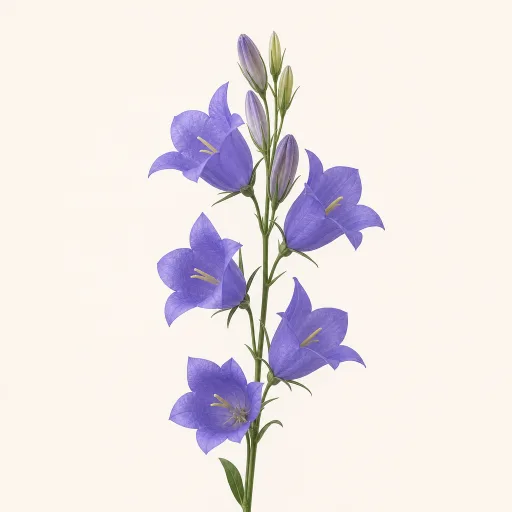
Purple bellflower, meaning, season and vase care
The purple bellflower charms with small, bell-shaped blooms and a clear country-cottage vibe. It looks airy and fits perfectly into loose bouquets and arrangements. It's especially popular as a thank-you gift, since in our catalogue it symbolizes gratitude. With a few simple steps it will stay fresh in the vase for several days.
At a glance
| Botanical name | Campanula (genus) |
| Meaning | Gratitude |
| Season | May to August/September |
| Vase life | Approx. 5 to 7 days with good care |
| Colors | purple |
| For pets | Generally non-toxic to cats and dogs |
What does the purple bellflower mean?
In our catalogue the purple bellflower stands for gratitude. Its delicate bells come across as modest and friendly, which is why it's often chosen for personal thank-you messages and small gestures. Symbolically it also conveys humility and fidelity, making it suitable for birthdays, thank-you bouquets and farewell arrangements. With its country-cottage look it works especially well for natural-themed events like garden weddings or rural celebrations. It doesn’t overwhelm, instead it complements messages when paired with lighter or white blooms if you want a calm yet expressive bouquet.
When is it in season?
Bellflowers naturally bloom from late spring into high summer, typically between May and August or September. Many species are native to Central Europe and nearby regions, where they appear wild on meadows and in gardens. Growers extend availability through cultivation and cutting, so you can usually find fresh stems through the summer months. In winter you’ll often see greenhouse-grown or imported stock, but the best freshness and abundance comes in the local season.
What pairs well with it in a bouquet?
The purple bellflower goes very well with daisies, lilac and lavender, as recommended in our catalogue. Paired with airy greens like eucalyptus, ruscus or fine ornamental grasses you get a loose, country-style bouquet. You can add baby's breath (Gypsophila) or small roses for a bit more fullness, and choose stems with fine, filigree foliage to emphasise the delicate bell structure. For colour play, light creams or whites support the purple, or mix different purple shades for a tonal, gentle effect.
Purple bellflower in the vase: step by step
- Cut the stems on a slant so they can take up water more easily.
- Remove any leaves that would sit below the waterline to prevent rot.
- Place the blooms in clean, lukewarm water and add cut-flower food if you have it.
- Change the water every two days and recut the stems as needed.
- Keep the vase in a cool spot out of direct sun, away from heaters and ripening fruit.
Give purple bellflower instantly and out of season (the Strausserie digital bouquet)
If you want to gift immediately, we offer two ways. In season you’ll get fresh cut flowers that we arrange by hand and ship freshly packaged. Outside the season, cultivated and imported stock can keep availability, though the blooms are sometimes a bit less abundant. Alternatively, use our Strausserie digital option: Flora ties a digital bouquet and sends it as a link that 'blooms' online and wilts like a real bouquet if you don’t keep it. The link is available immediately, includes care tips and brings online joy until the physical bouquet is delivered.
Feeling inspired?
Create your own bouquet in the workshop and send it as a link that blooms open.
Frequently asked questions
How long does the purple bellflower last in a vase?
Under optimal conditions it stays fresh for about 5 to 7 days. Regular water changes and fresh cuts extend its life.
Is the purple bellflower toxic to cats?
Bellflowers are generally considered non-toxic to cats and dogs. With very curious pets it's still sensible not to leave plants as a constant snack.
Why do the little bells sometimes hang their heads?
Hanging heads often come from lack of water or damaged stems. A fresh cut, clean water and cool placement help the blooms to perk up again.
What does the purple colour of the bellflower mean?
Purple traditionally stands for gratitude, appreciation and delicate feelings. The colour gives bouquets a calm, elegant character and underlines friendly messages.