
Protea, Meaning, Season and Vase Care
The protea is a striking eye-catcher with an architectural shape and long-lasting blooms. Its substantial flower head makes it ideal as a single focal stem or the center of a modern bouquet. Here you'll find pink protea, which symbolizes courage and change. Its robust nature makes vase care straightforward and rewarding.
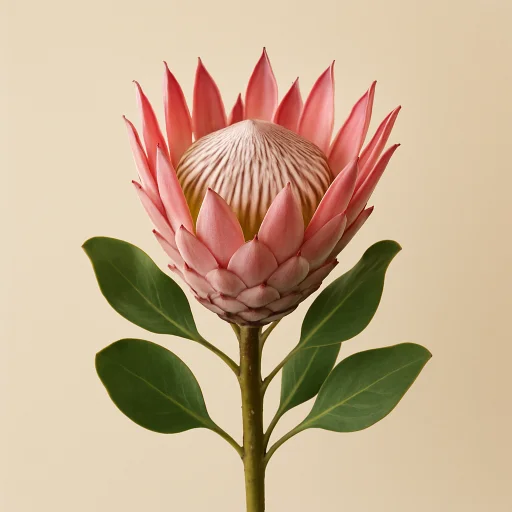
At a glance
| Botanical name | Protea (family Proteaceae) |
| Meaning | Courage & change |
| Season | Available year-round, main season in spring and summer; native to South Africa (Cape region), also cultivated in New Zealand and Australia |
| Vase life | 2 to 4 weeks (with good care) |
| Colors | Pink (available from us) |
| For pets | Not known to be toxic, but ingestion can cause stomach upset; keep out of reach of pets |
What does the protea mean?
The protea stands for change and courage, as noted in our catalog. Because of its unusual, confident shape it’s often used as a symbol of personality, new beginnings and resilience. It’s perfect for modern wedding bouquets, as a gift for farewells or career changes, and for interior arrangements that need to make a statement. On its own it reads like a small sculpture; in a bunch it gives structure and presence. Florists choose protea when durability and distinctiveness are wanted, it stays fresh for a long time and keeps its form, which reinforces its symbolic message.
When is it in season? (months, origin)
Proteas are native to the Cape region of South Africa and are now also grown in New Zealand and Australia. Because there are many species and production areas, cut proteas are available year-round. Their peak season is spring and summer, when production is highest. For you this means: you can expect a protea any time of year, but there’s more supply and variety in the warmer months. Import rules and specific varieties affect availability and price, so it’s worth asking your florist for special requests.
What pairs well with it in a bouquet?
Protea pairs well with bold, textured partners. We especially like dahlias, anemones and blue thistles with pink protea, that mix adds volume, color and contrast. Drier grasses like pampas or lagurus (bunny tails) suit a modern, natural bouquet. Greens such as eucalyptus, olive branches or pistachio foliage give a calm base and highlight the sculptural bloom. Aim for varied heights and airy gaps so the protea can remain the focal point. A single strong head surrounded by a wreath of dried grasses quickly becomes an artful one‑off, as Flora’s tip shows.
Protea in the Vase: Step by Step
- Remove any leaves that would sit under the water.
- Cut the stem on the diagonal and trim to fit the vase height.
- Place the protea in clean, lukewarm water and add cut-flower food if you have it.
- Change the water every two to three days and check for any rotting parts.
- Keep the vase in a cool spot, out of direct sun and away from ripening fruit.
Gifting protea, anytime (the bouquet series: Flora ties a digital bouquet and sends it as a link that blooms, and wilts like a real one if not saved)
You can confidently give protea as a gift even out of season: dried versions retain shape and color for a long time, and fresh stems can be safely shipped. Single-stem items like protea are easier to handle logistically, making them ideal for special presents. If you want to give something instantly, our digital service is an alternative: Flora ties a digital bouquet and sends it by link. The recipient sees a virtual bouquet that blooms and after a while virtually wilts unless they 'save' it. It complements the real gift with a surprising, original touch and isn’t tied to delivery times.
Feeling inspired?
Create your own bouquet in the workshop and send it as a link that blooms open.
Frequently asked questions
How long does a protea last in the vase?
Under optimal conditions a protea usually stays fresh in the vase for 2 to 4 weeks. Clean water, regular water changes and removing rotten leaves noticeably extend its life.
Is the protea toxic to cats?
Proteas are not considered highly toxic to cats, but they aren’t meant to be eaten. Ingested parts can cause gastrointestinal upset, so keep the flowers out of your pets’ reach.
Why is my protea drooping?
A drooping head usually points to lack of water or damaged stems. Recut the stem, put the bloom in clean water and check for stem injuries or bacterial problems.
What does the pink color of the protea mean?
Pink protea conveys softness while still expressing courage and change. Pink feels tender and modern, so it suits both romantic and minimalist bouquets.