
Mimosa: Sunny greeting, meaning, season and vase care
Mimosa brings feather‑light yellow clouds into your home and spreads a gentle spring scent. It’s a real eye‑catcher as a filler and for structure in bouquets. With us you get the classic yellow mimosa, which pairs especially well with tulips and freesias. Flora’s tip: yellow clouds with fragrance, a springtime classic with tulips and freesias.
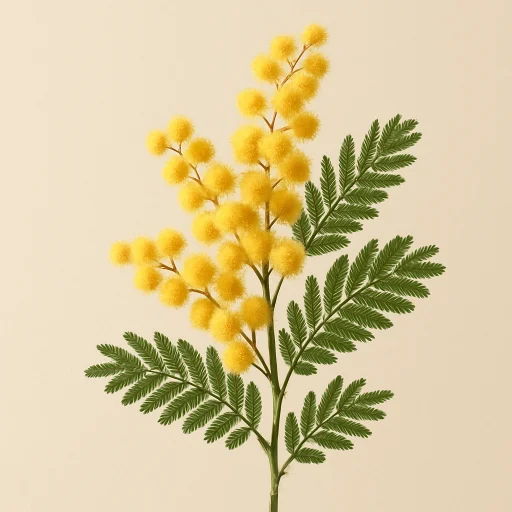
At a glance
| Botanical name | Acacia dealbata |
| Meaning | Sunny greeting |
| Season | Late winter to spring (mainly February to March) |
| Vase life | About 5 to 10 days, depending on freshness and care |
| Colours | Yellow |
| Pets | Generally considered non‑toxic, but keep away from curious pets |
What does the mimosa mean?
In our catalogue mimosa stands for a sunny greeting: light spring joy and uplifting affection. It feels friendly and carefree, so it’s great for occasions when you want to send cheer or comfort, for instance as a pick‑me‑up bouquet, for Mother’s Day or as a fresh addition to congratulatory arrangements. In flower language the yellow mimosa conveys optimism and warmth without fuss. Because it’s delicate, it’s often used as a filler and structural element to give bouquets movement and airy lightness.
When is it in season?
Mimosa is a typical early‑spring bloomer and usually reaches us from late winter into early spring, most often in February and March. The species originates in warmer regions and is well known from Mediterranean climates and Australia, but it’s cultivated and imported for the cut‑flower market. Blossoms react quickly to weather and transport, so freshness at purchase matters: look for dense, not shriveled flower clusters and fresh green shoots for longer enjoyment. Availability can be limited in winter.
What to pair it with in a bouquet?
Mimosa works wonderfully as an airy filler, especially with pastel and scented spring flowers. We pair it beautifully with pink tulips and freesias as recommended in the catalogue: tulips create calm surfaces, freesias add scent, and mimosa brings lightness. Other good partners are ranunculus, anemones or hyacinths for color and shape, and eucalyptus or ruscus as green framing. Tie mimosa loosely so the delicate blooms stay visible, and vary stem heights so the bouquet looks lively.
Mimosa in the vase: step by step
- Cut stems fresh, about 1 to 2 cm at an angle so they take up water better.
- Remove any leaves below the waterline to keep the water clean.
- Use fresh, room‑temperature water and a clean, sturdy jug or vase.
- A cool, bright spot out of direct sun and away from radiators prolongs vase life.
- Change the water every two days and trim stems again if needed.
Giving mimosa immediately and out of season (the ‘Strausserie’: Flora ties a digital bouquet and sends a link that blooms, it fades like a real one if not kept)
If mimosa isn’t available or you need to send something quickly, our digital service is a lovely option. With the Strausserie I, Flora, design your bouquet digitally and send a link that visually blossoms, the recipient experiences the opening instantly on phone or desktop. The digital bouquet is a thoughtful gesture you can send right away; if the image or link isn’t saved, the view fades over time, similar to a real cut flower. This combines the spontaneity of an online greeting with the feeling of a crafted floral gift.
Feeling inspired?
Create your own bouquet in the workshop and send it as a link that blooms open.
Frequently asked questions
How long does mimosa last in the vase?
With good care mimosa usually stays fresh for 5 to 10 days. Regular water changes, fresh cuts and a cool spot extend its life.
Is mimosa toxic to cats?
Mimosa is listed in many sources as generally not toxic, but sensitive animals can show stomach upset or irritation on contact. Better place bouquets out of a cat’s reach.
Why do mimosa heads droop?
Drooping heads usually mean lack of water or a too‑warm location. Recut the stems, change the water and move to a cooler spot, often they will perk up again.
What does the yellow color of mimosa mean?
Yellow stands for spring joy, optimism and warmth, so mimosa is a great cheerful greeting. In bouquets it brings sunshine and lifts the mood without being overwhelming.