Hyacinth: Sincerity, Fragrance, Season and Vase Care
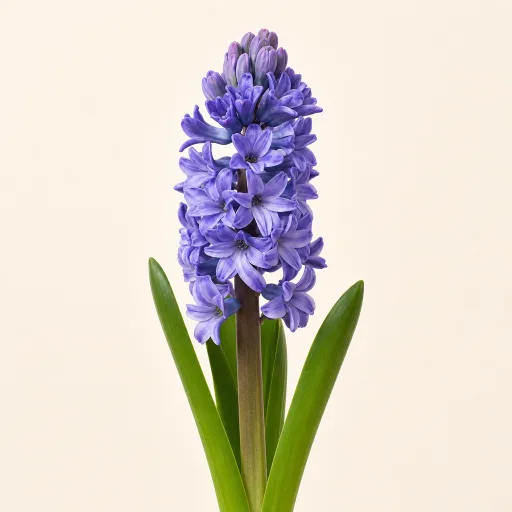
The hyacinth is a bold spring messenger with an intense fragrance that can fill a room on its own. Our purple hyacinths stand for sincerity and feel fresh and present. A single stem draws attention and works beautifully as a solo in a slim vase or in a small spring bouquet. With the right care the bloom lasts several days and unfolds its full scent.
At a glance
| Botanical Name | Hyacinthus orientalis |
| Meaning | Sincerity |
| Season | Late winter to spring, typically February to April |
| Vase life | About 5 to 8 days, depending on care and temperature |
| Colors | purple |
| For pets | Toxic to cats and dogs, especially the bulbs; keep out of reach |
What does the hyacinth mean?
In our catalogue the hyacinth stands for sincerity. It conveys clear, unguarded feelings and is a good choice when you want to thank someone honestly or send a heartfelt message. As a spring flower it also symbolizes new beginnings and the return of light and color after darker months. Because of its strong scent florists often use the hyacinth as a striking accent in small bouquets or as a solo bloom. For very sensitive settings the fragrance can be intense, so it’s chosen deliberately for personal gestures rather than broad decoration.
When is it in season?
Hyacinths are naturally in season in late winter and early spring, mostly from February to April. The species originates from the eastern Mediterranean and has long been cultivated in European nurseries. Cut flowers are freshest during these months, either field-grown or greenhouse-forced. Some growers force bulbs to bring blooms earlier, which makes them available sooner but can require more care. When buying look for firm buds and healthy stems so the flower can open in the vase, release its typical scent and stay fresh longer.
What pairs well with it in a bouquet?
Purple hyacinths go well with other spring flowers like tulips, ranunculus, anemones or grape hyacinths (Muscari). Whites and soft pastels balance the strong purple and let the scent shine without overpowering. For foliage choose fine, textured leaves like eucalyptus or salal to add airiness. Delicate grasses or young birch twigs work for a natural look. In compact arrangements leave space between the flower heads to ensure good air circulation, that helps prevent wilting and keeps blooms fresher longer.
Hyacinth in the vase: Step by step
- Cut the stem on a sharp diagonal to improve water uptake.
- Remove any leaves that would sit below the waterline so the water stays clean.
- Use a clean vase and fresh, lukewarm water; top up regularly.
- Place the vase in a cool spot out of direct sunlight and away from fruit.
- Change the water every one to two days and recut stems if needed.
Giving hyacinths, immediately and out of season
You can give hyacinths outside their main season too. Nurseries force bulbs so potted hyacinths or precooled cut blooms appear earlier. Potted hyacinths are a nice alternative because the recipient keeps the plant longer and can encourage rebloom with proper care. If you need to send something right away, a digital option is practical: our bouquet series also offers a digital bouquet, sent as a link that ‘blooms’ and fades like a real one if it’s not saved. That way you share the idea and mood of the hyacinth even when fresh buds aren’t available.
Feeling inspired?
Create your own bouquet in the workshop and send it as a link that blooms open.
Frequently asked questions
How long do hyacinths last in a vase?
Hyacinths usually last about five to eight days in a vase. With a clean vase, regular water changes and a cool spot you can extend their lifespan.
Are hyacinths toxic to cats?
Yes, hyacinths are toxic to cats and dogs; the bulbs are especially poisonous. Keep flowers and bulbs out of reach and contact your vet if you suspect ingestion.
Why do hyacinth heads droop after a while?
Drooping heads can be caused by lack of water, too-high temperatures or flower clusters that are heavy for the stem. Recut stems, check the water and move the vase to a cooler spot; sometimes a small support stick helps.
What does purple mean for hyacinths?
Purple hyacinths signify dignity and sincerity while adding a touch of elegance. Paired with lighter colors the purple looks particularly fresh and expressive.