
Freesia, meaning, season and vase care
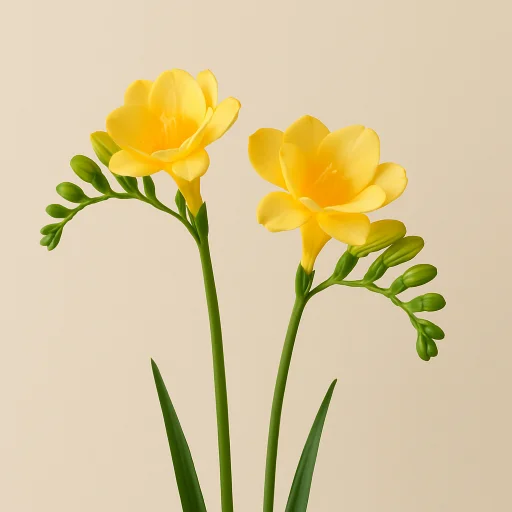
The freesia is a delicate scented wonder: slim stems and fine flower spikes bring lightness to any arrangement. We carry them in sunny yellow and associate them with tenderness. Their elegant shape lightens heavier blooms like hydrangeas or peonies and adds movement to every bouquet. Vase care is straightforward, but with a few simple steps you can noticeably extend their lifespan.
At a glance
| Botanical name | Freesia |
| Meaning | Tenderness |
| Season | Main season: late winter to spring months |
| Vase life | Approx. 5 to 10 days |
| Colors | Yellow |
| For pets | Not toxic to cats and dogs |
What does the freesia mean? (Symbolism, occasions)
In our catalogue the freesia stands for tenderness and gentle attention. With its pleasant, often intense fragrance it conveys closeness and care without being overwhelming. It’s a popular choice for small declarations of love, thank-you gifts or get-well wishes because it feels light, friendly and personal. Paired with soft pastels or monochrome palettes it also fits sympathy bouquets and weddings when a subtle, elegant touch is wanted. Its scent makes it especially suitable for intimate occasions that call for a sensual but unobtrusive expression.
When is it in season? (Months, origin)
Freesias reach their main season from late winter into spring, roughly January to May depending on cultivation and climate. Native to South Africa, the plant prefers mild conditions and develops its strongest scent there. In our regions freesias are grown outdoors, under glass or in greenhouses, so they’re plentiful and high quality in spring. Thanks to planned cultivation they’re often available outside peak season too, although freshly harvested spring stock usually smells the most intense.
What to pair them with in a bouquet? (specific companion flowers and foliage)
Freesias go particularly well with pink tulips and peonies: they lighten the volume of heavier blooms and add fragrance and movement. Blue hydrangeas and irises also make attractive colour contrasts, as the slim freesia stems offset large flower heads. For foliage, eucalyptus, ruscus or salal are good choices; they add structure without overpowering the delicate silhouette. Position freesias slightly in front of or between larger blooms so their spikes remain visible. That way you get a bouquet with scent, depth and balanced lightness.
Freesia in the vase: step by step
- Prepare the vase and fill it with lukewarm water plus cut-flower food.
- Cut the stems on the diagonal about 1 to 2 cm and remove any leaves that would sit in the water.
- Arrange freesias loosely: their delicate spikes need space for the scent to unfold.
- Keep them out of direct sun and away from heaters; a steady room temperature is ideal.
- Change the water every two days, recut stems if needed and remove any wilted blooms.
Giving freesias instantly, even out of season
You can often get freesias outside their peak season thanks to greenhouse production and targeted sourcing. If freesias aren’t available at short notice, we choose suitable alternatives with a similar feel and fragrance so the bouquet still keeps the desired lightness. Our bouquet series also offers a digital service: Flora crafts a digital bouquet and sends it as a link that blossoms on screen and wilts if not saved, mirroring a real bouquet. That way you can send the gesture immediately, complemented by care tips and a true delivery once spring stock is available.
Feeling inspired?
Create your own bouquet in the workshop and send it as a link that blooms open.
Frequently asked questions
How long do freesias last in a vase?
Freesias typically stay fresh in a vase for about 5 to 10 days. With clean water, flower food and regular recutting you can extend their lifespan.
Are freesias toxic to cats?
Freesias are considered non-toxic to cats and dogs, making them a safe choice for homes with pets. Still, avoid letting animals eat the flowers to prevent stomach irritation from plant material.
Why do freesias sometimes droop?
Drooping heads can happen if stems are dehydrated, exposed to too much heat or if the bloom is at the end of its life. Recutting the stems, placing them in a cooler spot and refreshing the water often restores their posture.
What does the yellow colour mean for freesias?
Yellow freesias radiate cheerfulness, warmth and friendliness and are great for sunny gestures. In our catalogue we also link the yellow tone to tenderness, so they carry both joyful and affectionate messages.