
Anemone, Sincerity: meaning, season and vase care
The anemone stands out with its clean, often pure-white petals and the dark center that gives it a graphic, modern look. In our catalogue it represents sincerity and works equally well in simple or elegant bouquets. The dark hearts create striking accents, my tip: pair them with ruscus for a reduced, contemporary style. With little effort you’ll enjoy their clear shapes for a long time.
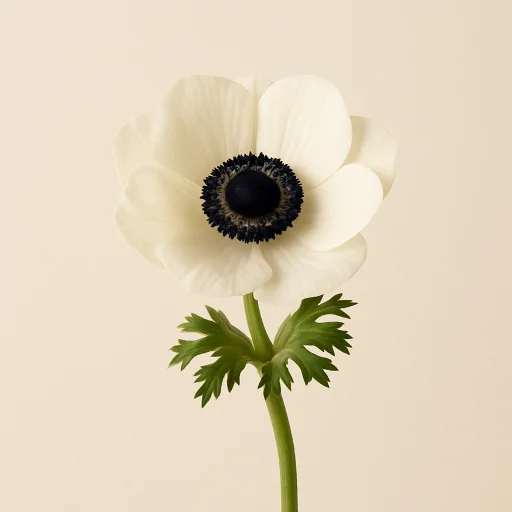
At a glance
| Botanical name | Anemone coronaria |
| Meaning | Sincerity |
| Season | Mainly February to May; occasionally imported outside the season |
| Vase life | About 4 to 7 days with proper care |
| Colors | We offer white. Anemones also occur in red, pink, blue and violet |
| For pets | Moderately toxic. Contact or ingestion can cause skin and gastrointestinal irritation |
What does the anemone mean?
The anemone symbolizes sincerity and clear expression. Its contrasting dark center gives it a direct, modern presence, which is why it’s often chosen for pared-back, graphic bouquets. Traditionally it can also stand for expectation and protection; in floristry it’s popular for wedding and gift bouquets when you want a straightforward, honest message. Because its shape is so distinctive, a small bunch often makes a strong statement. My tip: the dark centers create graphic accents, combined with ruscus they underline a contemporary look especially well.
When is it in season?
The natural season for anemones runs from late winter to late spring, roughly February to May. In our regions they originate from the Mediterranean and cool-moist locations, so they prefer a springlike climate. Thanks to cultivation and imports, anemones are often available outside the main season, but quality and vase life are best during their natural bloom time. For fresh stock look for firm buds and sturdy stems; stems can weaken after long storage. When ordering out of season we source from controlled growers to keep the appearance consistent.
What pairs well with them in a bouquet?
Anemones go very well with soft, rounded blooms like ranunculus and white roses, and they also harmonize with the strong form of dahlias and the graphic craspedia. In our catalogue ranunculus, dahlia, white rose and craspedia are recommended partners. For foliage I suggest ruscus, which supports the clean line, or fine eucalyptus for subtle texture. In a bouquet, group anemones lightly so their dark centers remain visible. Avoid heavy, voluminous blooms right next to them, otherwise the delicate heads can get visually lost.
Anemone in the vase: step by step
- Trim the stems fresh and cut them on the diagonal, ideally right after they arrive.
- Remove excess leaves so no foliage rots in the water.
- Fill the vase with fresh, lukewarm water and add a cut-flower food tablet if available.
- Place in a cool, bright spot away from direct sun and drafts.
- Change the water every two days and re-cut the stem ends slightly.
Giving anemones as a gift, instantly and out of season (the Strausserie: Flora ties a digital bouquet and sends it as a link that blooms, wilts like a real one if not cared for)
If you want to gift anemones, you can have them delivered fresh in season or order imported stock outside the season. On delivery, give the recipient a short care note: trim the stems, change the water and keep them cool. The Strausserie also offers a digital option: I assemble a digital bouquet and send it as a link that opens and blooms, accompanying the recipient virtually. That digital bouquet is an immediate message, while the real bunch is delivered physically and will wilt after a few days if not cared for. It’s a lovely complement to a real delivery.
Feeling inspired?
Create your own bouquet in the workshop and send it as a link that blooms open.
Frequently asked questions
How long do anemones last in the vase?
Anemones typically last four to seven days. It depends on the cut, water quality, temperature and whether you re-cut the stems regularly.
Are anemones toxic to cats?
Yes, anemones contain irritating compounds and are not suitable for cats and dogs. Ingestion can cause gastrointestinal upset and skin irritation, so keep them out of reach of pets.
Why is my anemone drooping?
Anemones have relatively delicate stems and heavy flower heads, which can droop after transport or heat. Freshly re-cut the stems and place them in cool water, that often helps. Also choose a cool spot away from direct sun.
What does the white color of the anemone mean?
White traditionally stands for purity and sincerity, which matches our catalogue entry Sincerity. White anemones are often chosen for weddings, funeral floristry and elegant arrangements.